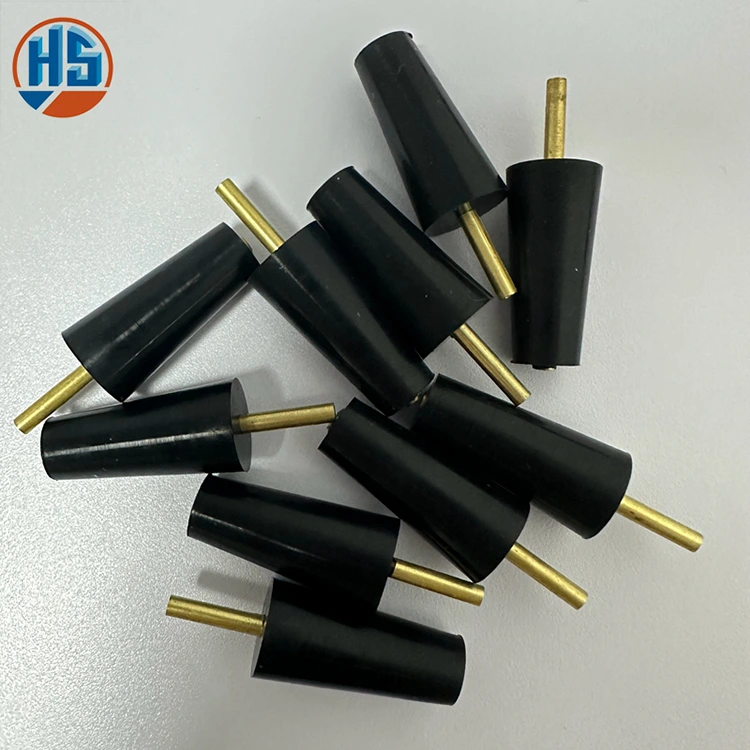
Dual injection molding, like co-injection molding, two-shot molding, and sandwich injection molding, is a type of multi-material injection molding technology. The basic idea of multi-material injection molding is to combine two or more materials with different properties together to increase the value of the product. In this article, the first injected material is called the substrate or base material, and the second injected material is called the covering material.
In the dual injection molding process, the covering material is injected above, below, around, or inside the substrate to form a complete component. This process can be accomplished through multiple injections or embedded injections. Elastic resins are commonly used as covering materials.
Multiple injections: Multiple injections are a good medical device processing method if the construction of the covering material allows it. This technique requires a special injection molding machine equipped with multiple barrels to inject different resins into a mold. The barrels should be placed side by side or in an L-shape, and the resins are injected into the mold through one or more injection points. When using the same injection point, it is called co-injection, and the produced composite component is a core resin material covered by an outer layer. When using multiple injection points, it is called dual injection, and one material is molded on top of another material to produce a multi-layer structure.
However, multiple injections are not suitable for all products. During dual injection, the slide must be moved or the core must be moved to another cavity, or another injection molding machine can be used.
Embedded injection: Embedded injection is necessary to produce fully covered injection molded handles and similar products. To achieve complete coverage, the substrate must be removed from the original cavity and placed in another core and cavity to inject the covering material. During this process, the other mold should also run on the same or a different size injection molding machine (depending on the size of the injection molded part). Typically, the substrate is much larger than the covering material and may need to be preheated to bring the surface temperature close to the melting point of the covering material for optimal bonding strength.
In-mold assembly
Dual injection molding is sometimes called in-mold assembly because the two materials are fully assembled together rather than just producing a layered structure. This technology can be used for both individual parts and component materials. Regardless of the application, it is crucial to ensure that the substrate and covering materials achieve the required mechanical or chemical bonding strength.
Precautions for multi-material injection molding
In general, to strengthen the bonding strength, the melting temperature of the covering material resin should be the same as the substrate. If the melting temperature of the covering material is too low, the substrate surface cannot be melted, resulting in insufficient bonding strength. However, if the melting temperature is too high, the substrate will soften and deform, and in severe cases, the covering material will penetrate the substrate, causing the part to fail. Therefore, selecting matching materials is necessary to ensure good bonding. Generally, matching materials should have similar chemical properties or contain matching composite components. When the substrate and covering materials do not match, only mechanical interlocking can be formed instead of chemical bonding.
Multi-material injection molding also requires attention to some issues, the most common of which include insufficient chemical or mechanical bonding strength between polymers, incomplete filling of individual or multiple parts, and the occurrence of burrs on individual or multiple material parts.
We use cookies to offer you a better browsing experience, analyze site traffic and personalize content. By using this site, you agree to our use of cookies. Privacy Policy