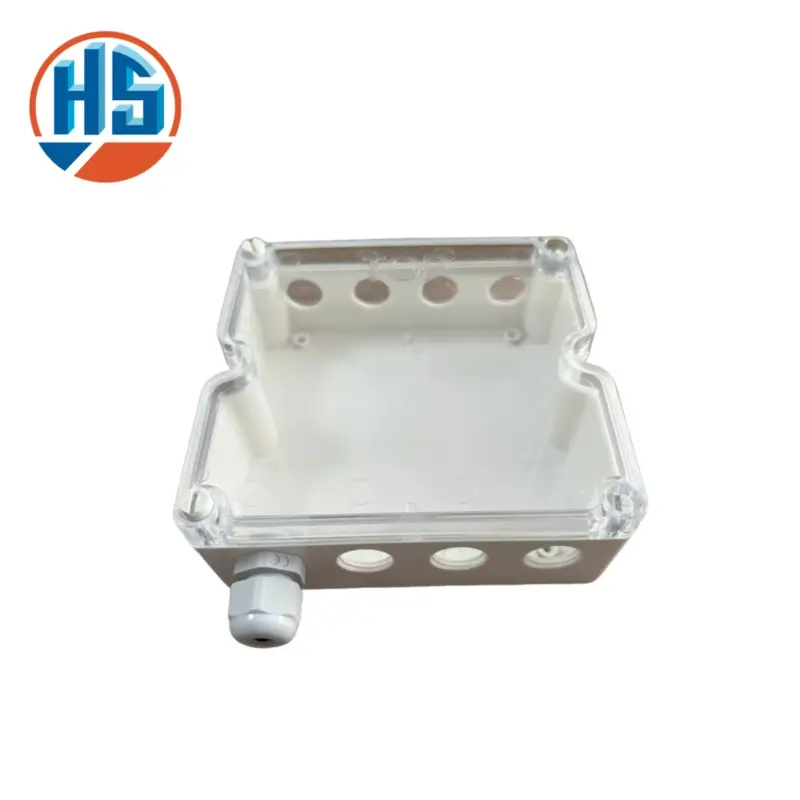
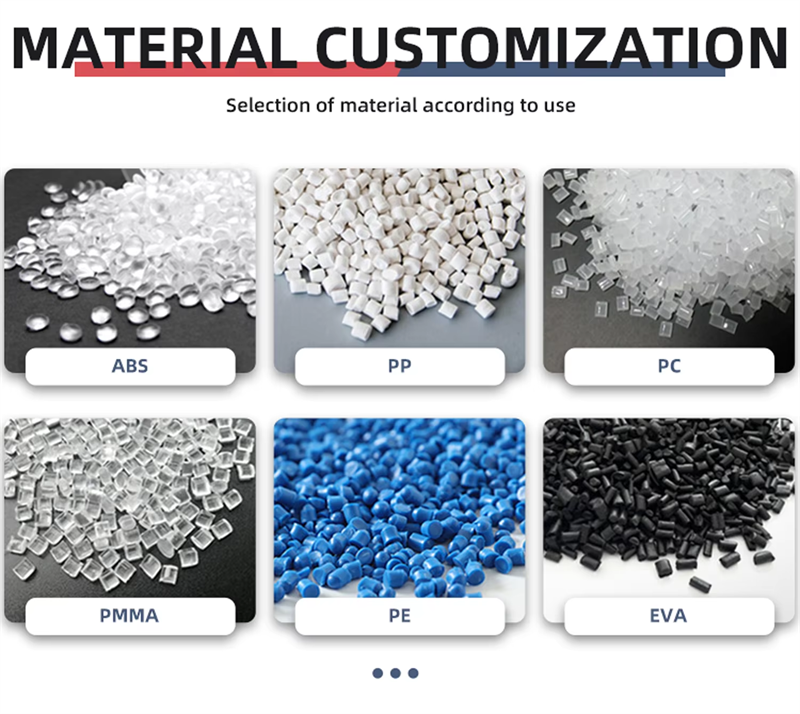
If you’re engineering a product, one of the most foundational decisions you’ll make is selecting the right material for your plastic enclosure. This choice impacts everything from durability and safety to cost and aesthetics. At Hansheng, we understand this challenge intimately. We’ve helped countless clients navigate this exact crossroads, balancing technical specifications with real-world performance. So, how do you decide between two of the most common thermoplastics—Polycarbonate (PC) and Acrylonitrile Butadiene Styrene (ABS)? Let’s break it down from a practical, engineering-focused perspective.

What Are Your Key Performance Requirements for the Plastic Enclosure?
First, identify the non-negotiable demands of your application. Ask yourself these critical questions:
Will the plastic enclosure face significant impact or potential drop hazards?
Does it need to operate in high-temperature environments?
Is flame resistance or a UL94 rating a mandatory safety standard?
How important is surface aesthetics and color stability under UV light?
Your answers here will immediately point you toward one material. For instance, if supreme impact strength and transparency are vital, Polycarbonate is the standout candidate. If you need a cost-effective, rigid, and easily molded plastic enclosure with good overall toughness, ABS is often the starting point.
How Do Polycarbonate and ABS Compare in Hard Data?
Let’s move from generalities to specifics. Here is a side-by-side comparison of key properties we at Hansheng regularly evaluate for our clients’ projects:
| Property | Polycarbonate (PC) | ABS |
|---|---|---|
| Impact Strength | Extremely High | Good |
| Heat Resistance | Excellent (~125°C) | Moderate (~80°C) |
| Flame Retardancy | Often inherently FR; V-0 grades readily available | Typically requires additives for V-0 rating |
| UV Resistance | Good (can yellow over time without stabilizers) | Poor (requires UV-protective additives) |
| Chemical Resistance | Moderate (vulnerable to some solvents) | Fair |
| Cost | Higher | Lower |
| Surface Finish | Very Good, can be optically clear | Good, high-gloss finish achievable |
This table reveals the core trade-off: Polycarbonate offers superior performance in demanding conditions, while ABS provides a robust and economical solution for less extreme applications.
Can You Get the Best of Both Worlds with a Blend?
Absolutely. This is where material science offers a clever solution. PC-ABS blends combine Polycarbonate’s heat and impact resistance with ABS’s superior processability and cost benefits. For many of our projects at Hansheng, a PC-ABS alloy proves to be the optimal choice. It delivers a balanced property profile that is ideal for consumer electronics, automotive interiors, and medical device housings that require a reliable plastic enclosure without the premium price of pure PC.
How Does This Decision Affect Manufacturing and Your Bottom Line?
Material choice ripples through your entire project. Polycarbonate can be trickier to process, requiring higher molding temperatures and careful drying. ABS is generally more forgiving and easier to mold with excellent flow characteristics. At Hansheng, we don’t just supply materials; we provide integrated support. Our engineers work with you to select a grade that not only meets your performance specs but also optimizes manufacturing efficiency and total project cost for your plastic enclosure.
Choosing the right material is more than a checkbox—it’s about partnership and precision. It’s about ensuring the final product excels in the hands of the end-user. This commitment to engineered solutions is what defines the Hansheng approach.
Still weighing the options for your specific application? The best path forward is a direct conversation with our technical team. We can provide detailed data sheets, prototype guidance, and tailored recommendations. Contact us today with your project parameters—let’s discuss how we can bring your plastic enclosure to life with the perfect material match.